 Apply for Dealership
 Software & Connectivity
 Sectors
 Contact
 Speak with an expert
 Schiller AG


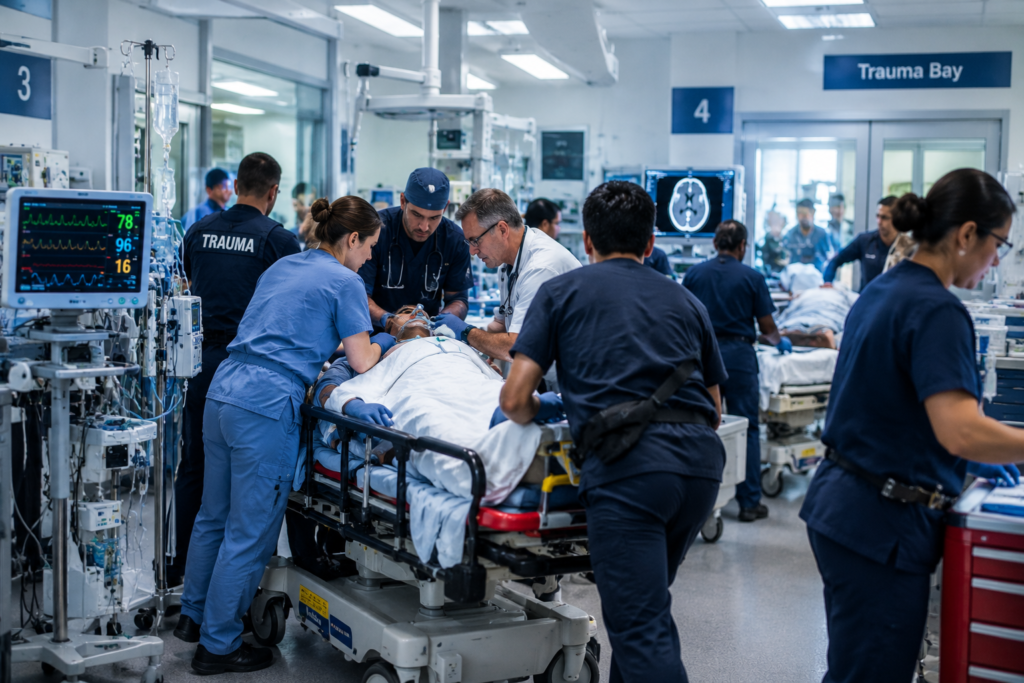
Portable CT Scanner is helping bring advanced brain imaging directly to the bedside — in intensive care units, emergency departments, trauma bays, operating rooms, and other critical-care environments. By reducing the need to transport vulnerable patients across the hospital, these systems can help clinicians access essential imaging when and where it matters most.
In neurological emergencies, the ability to scan closer to the point of care is not simply about convenience. It is about creating a faster, more connected pathway from patient → imaging → clinical decision → treatment.
The Problem with Moving Critically Ill Patients
Traditionally, anyone needing a CT scan is transported to the radiology department. For a patient who is stable and ambulatory, that’s a minor inconvenience. For someone who is unconscious, on ventilatory support, or moments out of a brain bleed, even a short journey through hospital corridors introduces real risk — monitoring disruptions, hemodynamic instability, and delay at exactly the moment none of those can be afforded.
The result is a logistical bottleneck that ripples through clinical decision-making. Surgeons wait. Treatment windows are narrow. Families wait for news that takes longer to come than it should.
A Scanner That Rolls to the Bedside
Point-of-care CT is the direct answer to this problem. Rather than transporting the patient to imaging, the imaging comes to the patient — into the ICU, the emergency department, the stroke unit, the operating room.
OmniTom® Elite is one of the most capable devices in this space. It’s a 16-slice, single-phase battery-operated mobile CT scanner built specifically for high-acuity environments where stability and speed both matters.
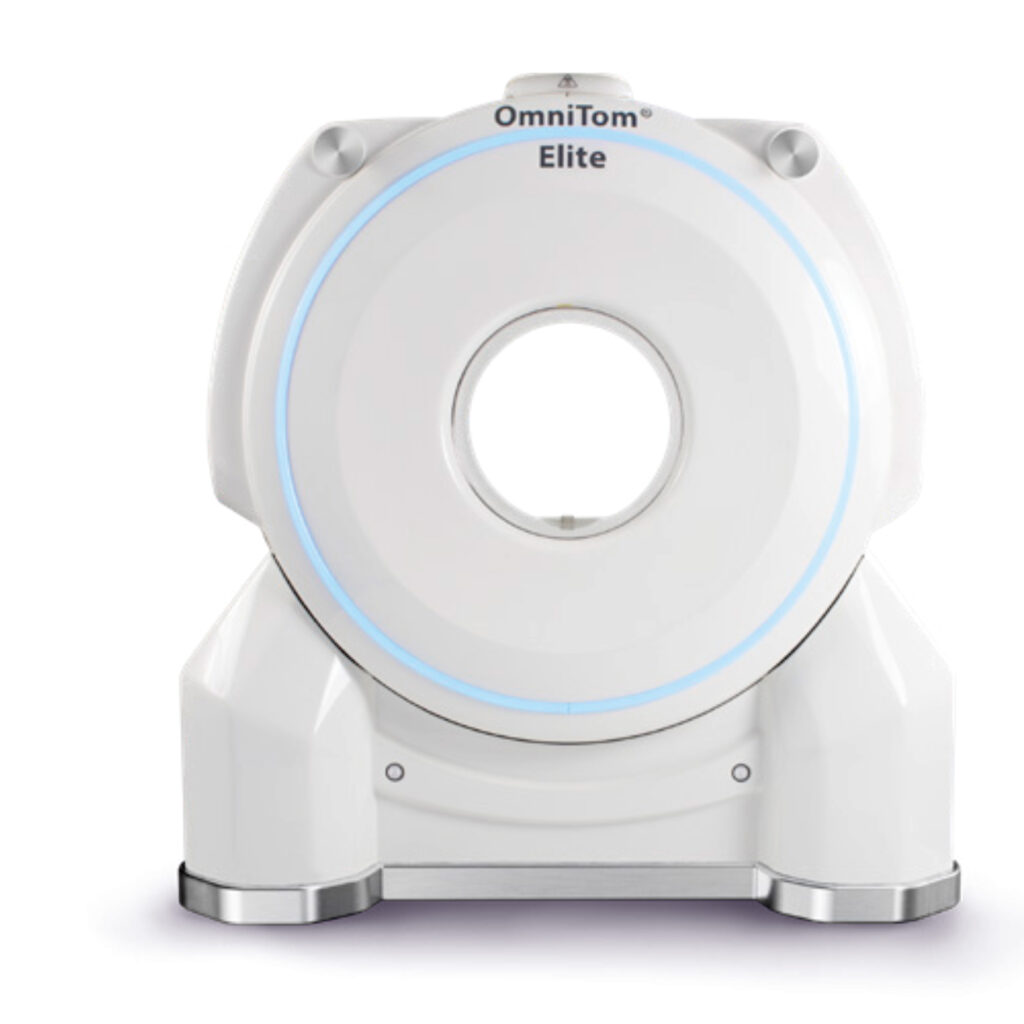
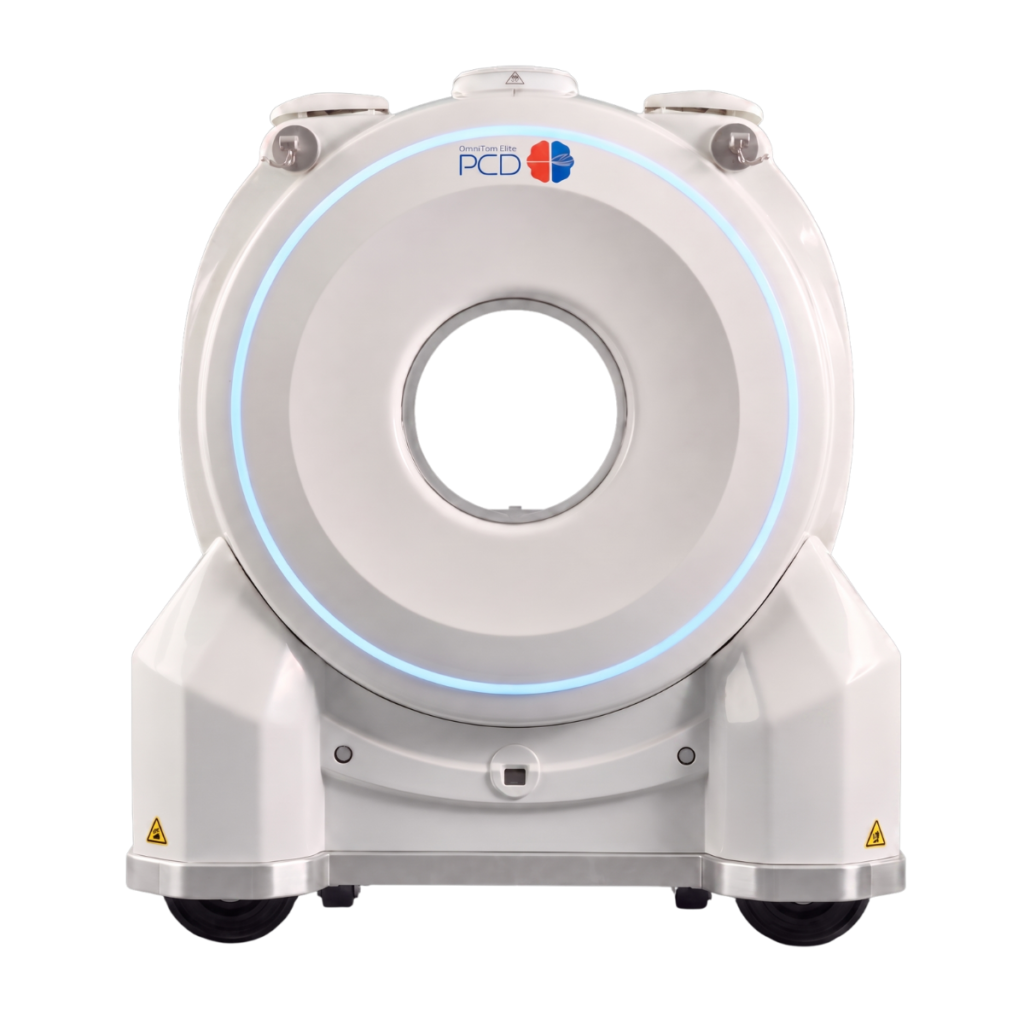
A few things set it apart technically. The N-DAS system — combining an ultra-low-noise detector with a 24-bit lossless imaging chain — is designed to reduce electronic noise without sacrificing image fidelity, while meeting MITA smart-dose and XR-29 standards for dose efficiency and structured reporting. The system supports axial, helical, and CT angiography acquisition at a 0.625 mm slice thickness, with compatibility for surgical navigation systems.
For a device that needs to operate in tight, equipment-heavy spaces, mobility engineering matters as much as imaging quality. The OmniTom Elite uses an omni-wheel system — reportedly the first of its kind in a medical device — that allows lateral, diagonal, and full 360-degree movement through clinical spaces where a conventional wheeled unit simply couldn’t maneuver. Smart collision-avoidance sensors add another layer of safety by alerting the operator before the unit makes contact with any obstruction.
What This Means at the Bedside
Faster imaging translates directly into faster decisions. When a clinical team can see inside the brain within minutes of a suspected stroke, hemorrhage, or post-surgical change, they can act with confidence rather than waiting and watching. For the patient, this means less disruption during critical moments and care that happens where they already are. For the team, it means cleaner workflows and fewer variables between symptom onset and treatment.
Portable CT doesn’t replace a full radiology suite. But for the specific window when transport is not safe or not fast enough, having diagnostic-quality imaging a few feet from the bedside closes a gap that has cost patients — and clinicians — dearly for decades.
As hospitals continue to strengthen critical and emergency care capabilities, bedside imaging is becoming less of a novelty and more of a standard expectation. Technology has caught up with what clinicians have always needed: answers, at the bedside, right now.